
Custom 3-axis milling service
3-Axis CNC Machining Services for Custom Prismatic Parts
6CNC manufactures metal and plastic parts with faces, pockets, holes, slots, and contours using controlled 3-axis CNC milling. Send the 3D model and drawing for process selection, DFM review, inspection planning, and a project-specific quotation.
Prototype and low-volume production support
Feature-specific tolerance review for suitable geometry
Machining, inspection, and finishing coordinated to your drawing
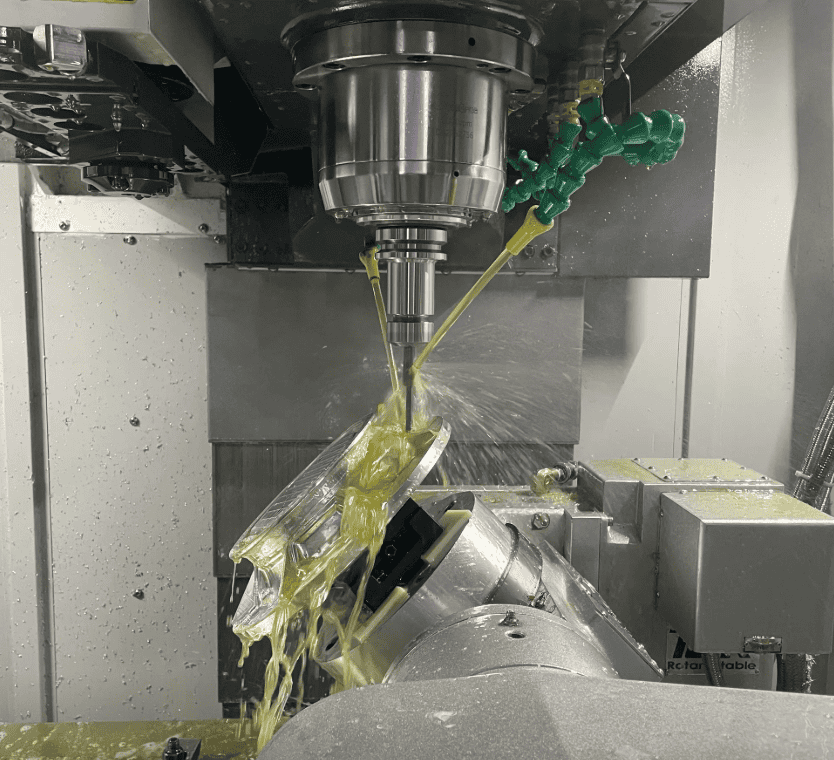
Process selection at a glance
3 linear axes
X, Y, and Z tool motion
Best fit
Prismatic parts and accessible features
Escalate when needed
4-axis or 5-axis for harder-to-reach faces
Process fit
Is 3-Axis Machining Right for Your Part?
3-axis milling is usually the most direct choice when the part is prismatic and its important features can be reached from planned orientations without simultaneous rotary-axis motion.
- The main features can be reached from the top or after planned repositioning.
- The part is primarily prismatic rather than rotational.
- Faces, holes, slots, pockets, and profiles dominate the geometry.
- Economical setups matter more than simultaneous multi-axis access.
Service overview
Efficient Milling Without Unnecessary Process Complexity
A 3-axis machining center moves the cutting tool along the X, Y, and Z axes while the workpiece remains fixed during each operation. This makes the process well suited to plates, brackets, housings, fixtures, heat sinks, manifolds, and other parts whose critical features are accessible from planned orientations.
Choosing 3-axis machining is not simply a question of part complexity. The decision depends on tool access, datum relationships, workholding, feature depth, wall thickness, tolerance allocation, quantity, and inspection method. A part may still need more than one setup, but a clear datum strategy can keep those setups controlled and economical.
For compound angles, undercuts, or several critical faces that must remain related with fewer re-clamps, our engineers may recommend 5-axis CNC machining. For primarily cylindrical geometry, CNC turning may be the more efficient starting point.
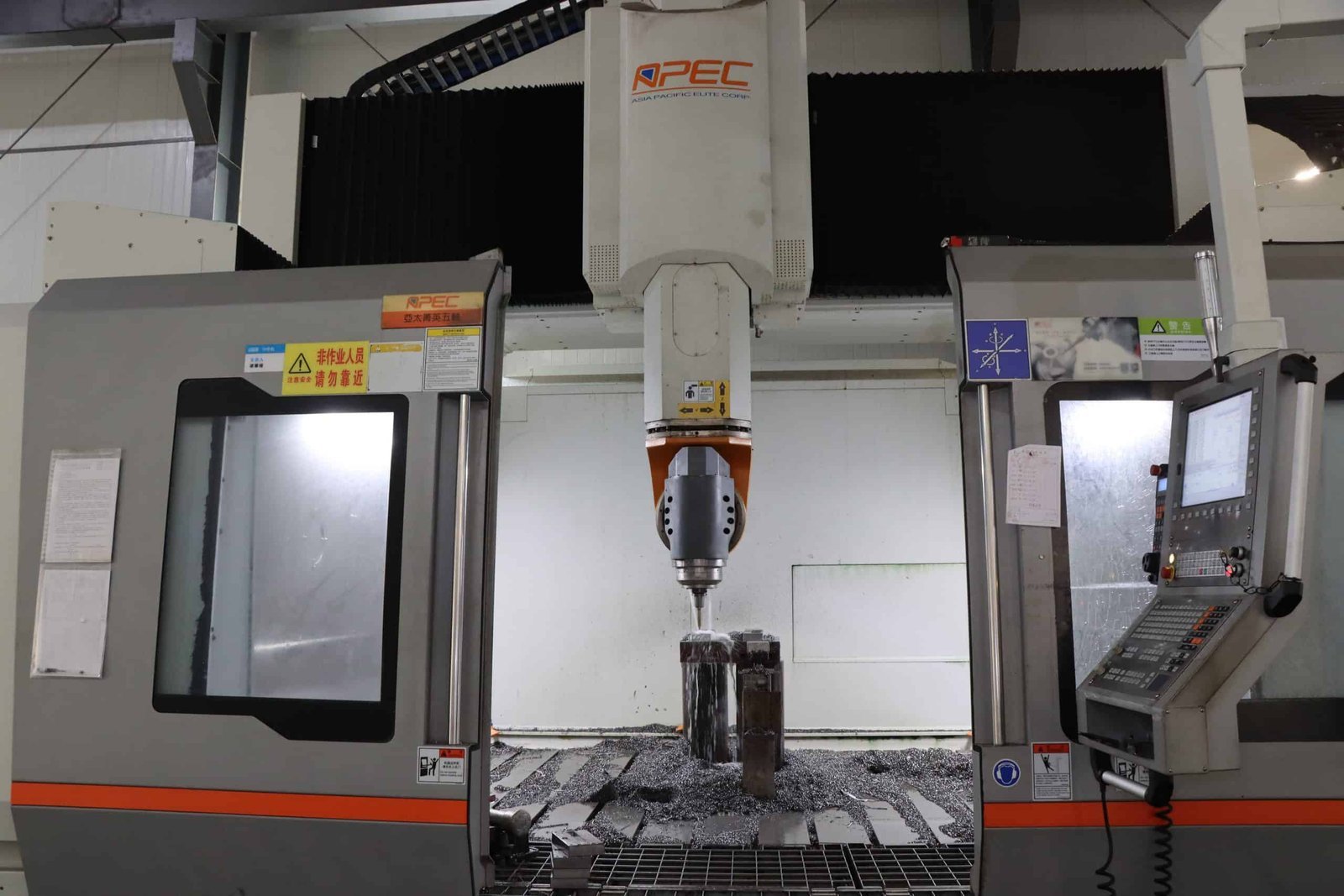
Capability specifications
3-Axis Machining Capability by Requirement
Use the table as a planning guide. Final capability is confirmed from the controlled model and drawing because material, feature size, tool reach, wall thickness, setup strategy, finishing, and measurement access all affect the result.
| Requirement | Standard planning basis | Project-specific review |
|---|---|---|
| Production range | Prototypes and controlled low-volume batches | 6CNC commonly supports 1–600 parts; repeat-order planning depends on setup and demand |
| Typical operations | Facing, contouring, pocketing, drilling, boring, reaming, and tapping | Deep features, small internal radii, and difficult tool access require DFM review |
| Dimensional tolerance | Drawing-based tolerance allocation by feature | Feature-specific tolerances down to ±0.002 mm may be reviewed for suitable geometry and controlled conditions |
| Machined surface | As-machined finish with process-appropriate tool paths | Ra 1.6 may be reviewed where geometry, material, and access allow |
| Inspection | First-article, in-process, and final dimensional checks | CMM, surface-roughness, or additional records according to drawing requirements |
| File inputs | 3D model plus controlled 2D drawing | Include material, quantity, finish, datums, GD&T, critical features, and acceptance criteria |
Capability note: ±0.002 mm and Ra 1.6 are reviewable feature-level capabilities, not default tolerances or guaranteed values for every dimension and surface.
Parts and geometries
Custom 3-Axis Machined Parts
The strongest candidates concentrate functional features on accessible planes and use a stable locating surface. Multiple setups can be planned when required, but each reorientation adds datum-transfer and workholding considerations.
01
Plates and Brackets
Mounting plates, adapter plates, structural brackets, and supports with profiles, hole patterns, counterbores, and pockets.
02
Housings and Covers
Electronic housings, covers, bezels, and enclosures with sealing faces, internal pockets, connector openings, and tapped holes.
03
Fixtures and Tooling
Assembly fixtures, inspection nests, soft jaws, machine bases, and locating blocks requiring repeatable datums.
04
Manifolds and Blocks
Prismatic valve blocks and manifolds with intersecting drilled passages, ports, mounting faces, and controlled sealing surfaces.
05
Heat Sinks
Thermal plates and heat sinks with fins, mounting patterns, component pockets, and flat interface surfaces.
06
Prototype Components
Functional prototypes used to validate fit, assembly, material choice, tolerance allocation, and manufacturing assumptions.
Materials and finishes
Materials for 3-Axis CNC Milling
Material selection affects cutting forces, heat, burr formation, distortion, achievable edge quality, and finishing allowance. Confirm the exact grade, condition, certification, and finish in the RFQ.
Material group
Aluminum
Common options
6061, 6063, 6082, 7075, 2024, 5052
Compatible finishing examples
As machined, bead blasting, anodizing, chromate conversion, powder coating
Stainless steel
Common options
201, 301, 303, 304, 316, 416
Compatible finishing examples
As machined, passivation, polishing, bead blasting, electropolishing
Steel and tool steel
Common options
1018, 1045, A36, 4140, 4340, A2, D2, H13
Compatible finishing examples
Black oxide, plating, heat treatment, grinding, polishing, coating
Brass and copper
Common options
C36000 and other specified brass or copper grades
Compatible finishing examples
As machined, polishing, nickel plating, tin plating, protective coating
Engineering plastics
Common options
ABS, POM, nylon, polycarbonate, PEEK, PTFE, acrylic
Compatible finishing examples
As machined and material-compatible polishing or protective handling
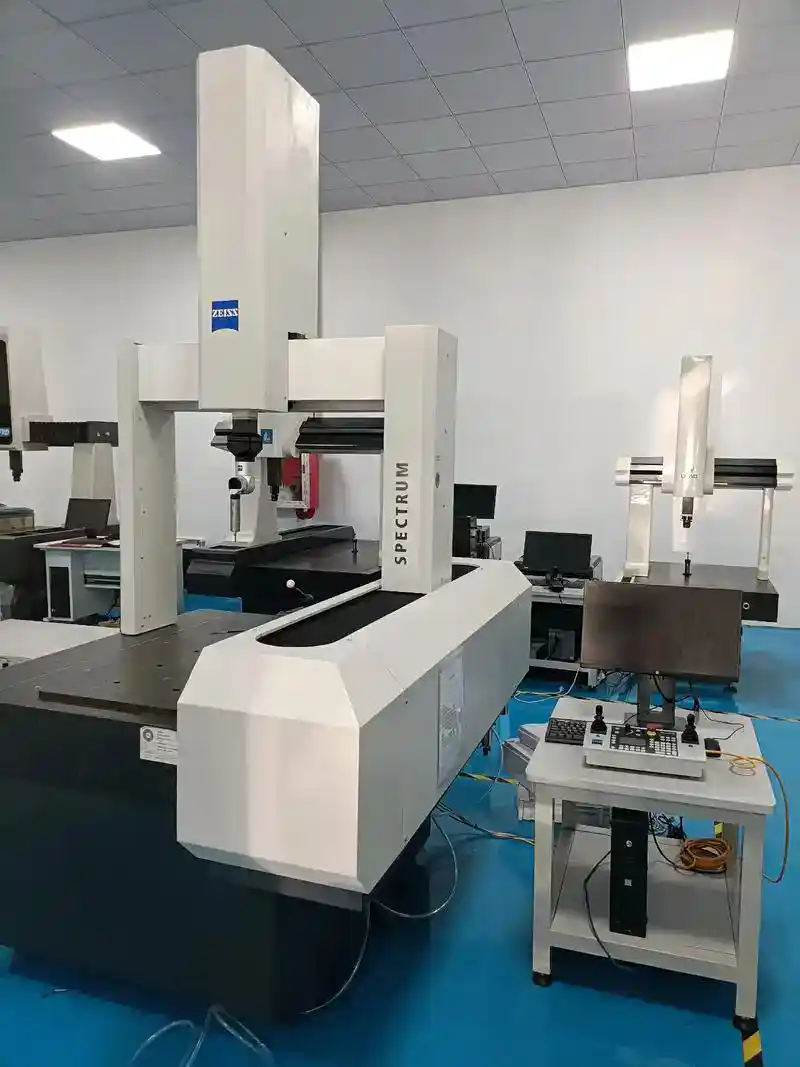
Quality and inspection
Control the Datum Chain, Not Only the Final Dimension
Quality planning begins before cutting. We review which surfaces establish the part, how the workpiece will be held, which features are created in each setup, and how the drawing defines their relationships.
- Drawing and revision review before production
- First-article verification before continuing the batch
- In-process checks for features at risk of drift or distortion
- Final dimensional inspection against agreed acceptance criteria
- CMM and surface-roughness measurement when appropriate
- Material and inspection documentation by project requirement
Specify critical dimensions, datums, GD&T, reporting format, sampling level, and whether dimensions apply before or after finishing. Learn more about 6CNC quality assurance.
DFM and cost drivers
How to Make 3-Axis Machining More Economical
Part price is driven by material, stock size, setup count, machining time, tool access, tolerance, inspection, finishing, and quantity. The best savings usually come from simplifying the manufacturing plan without weakening the function.
01
Expose Critical Features
Place important features on accessible faces where possible. Side holes, angled surfaces, and undercuts may require another setup or process.
02
Use Practical Internal Radii
Internal corners are produced with rotating cutters. Larger radii permit stronger tools and can reduce machining time.
03
Limit Deep Narrow Pockets
Long tool reach can increase deflection, vibration, cycle time, and risk. Open access or revised depth-to-width ratios may improve stability.
04
Protect Thin Walls
Thin sections can move during cutting or after unclamping. Add support, adjust stock strategy, or relax noncritical geometry where possible.
05
Allocate Tolerances by Function
Apply tighter tolerances only to features that control fit or performance; unnecessary tight limits increase process and inspection effort.
06
Define Finishing Allowance
Coating thickness, masking, edge treatment, and post-finish inspection should be planned before the machining dimensions are finalized.
Applications and workflow
From Drawing Review to Delivered Parts
3-axis milling supports industrial automation, electronics, robotics, aerospace tooling, medical equipment, energy systems, and general machinery when the geometry and control plan fit the process.
01 · Review
Upload Files
Send the 3D model, controlled drawing, material, quantity, finish, destination, and required date.
02 · Plan
DFM and Quote
We review tool access, setups, tolerance, burr risk, finishing allowance, and inspection requirements.
03 · Make
Machine and Inspect
Parts are produced with agreed first-article, in-process, and final verification.
04 · Deliver
Finish and Ship
Approved finishing, documentation, packaging, and delivery are coordinated to the project.
Common questions
3-Axis CNC Machining FAQ
What is a 3-axis machining center?
It is a CNC milling machine that moves the cutting tool along three linear directions—X, Y, and Z. The workpiece is held in a fixed orientation during each operation and may be repositioned for additional faces.
What parts are best suited to 3-axis CNC milling?
Typical candidates include plates, brackets, housings, covers, fixtures, heat sinks, manifolds, and other prismatic components with accessible faces, pockets, holes, slots, and contours.
When should I choose 5-axis instead?
Consider 5-axis machining when the part has multiple angled faces, compound geometry, deep hard-to-reach features, or critical relationships that benefit from fewer re-clamps. The correct choice depends on the complete drawing, not the number of visible features alone.
What tolerances can 6CNC review for 3-axis parts?
Tolerance depends on feature size, material, wall thickness, tool reach, datum strategy, finishing, and inspection. Feature-specific tolerances down to ±0.002 mm may be reviewed for suitable geometries and controlled conditions, but this is not a universal default.
Which files should I send for a quotation?
Send a native or neutral 3D model together with the controlled 2D drawing. Include material and condition, quantity, finish, critical features, tolerances, datums, GD&T, inspection needs, destination, and required date.
Start your project
Get a Project-Specific 3-Axis Machining Review
Upload your CAD files and drawing. 6CNC will review process fit, setup strategy, tolerance, inspection, finishing, quantity, and delivery requirements before providing a clear quotation.